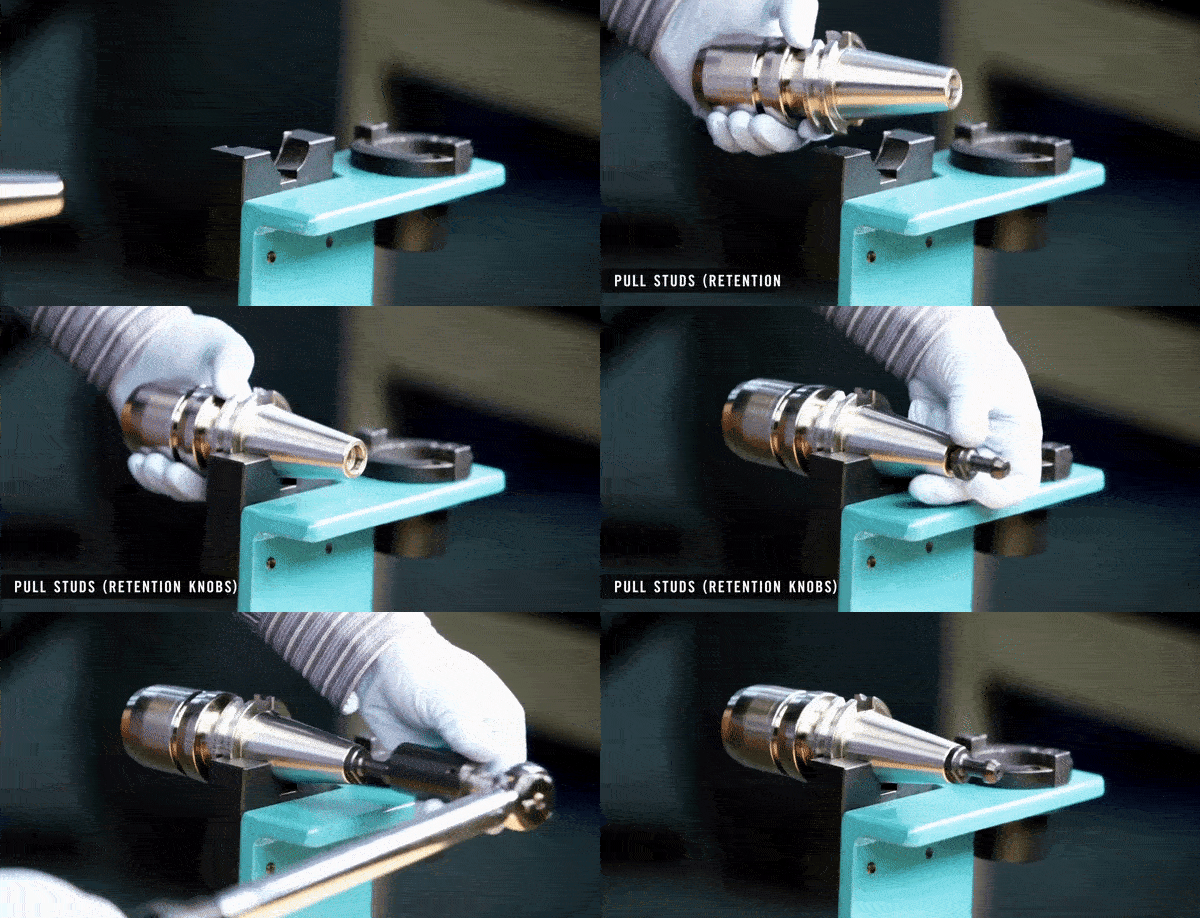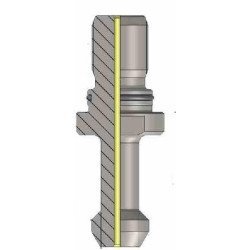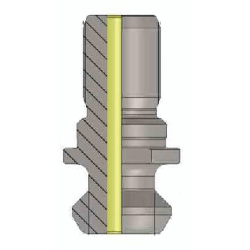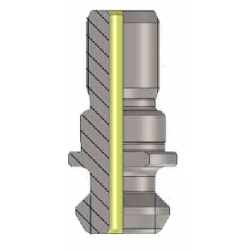
Pull Studs (Retention Knobs)
Pull Studs, also known as Retention Knobs, are critical components that connect the tool holder to the machine spindle drawbar in CNC machining centers. They are threaded into the rear of the tool holder and provide the engagement point required for secure tool retention during high-speed rotation, cutting loads, and automatic tool change operations.
Although small in size, pull studs play a major role in machining safety, spindle protection, and tool holding reliability. Correct pull stud selection is essential because the design, thread, head geometry, and gauge dimensions are machine-specific and must match the spindle drawbar system exactly.
Engineering Highlights
- Primary Function: Provides the interface between the spindle drawbar and the tool holder for secure retention.
- Machine Specific: Pull studs are not universal and must match the exact spindle and tool holder specification.
- Operational Role: Essential for safe automatic tool changing, correct clamping force, and stable machining.
- Safety Critical: Incorrect selection or improper tightening can damage the spindle, holder, or drawbar system.
Key Features
- Manufactured for accurate fitment with specific tool holder and spindle combinations.
- Designed to withstand repeated clamping and unclamping cycles in CNC machining environments.
- Supports secure tool retention under cutting loads, spindle acceleration, and automatic tool change operations.
- Available for different taper systems and machine standards, including commonly used CNC holder interfaces.
- Suitable for use in milling, drilling, boring, and general machining applications where dependable tool retention is required.
Typical Applications
Pull studs are used on CNC machining centers, VMCs, and other automatic tool change machines where the spindle drawbar grips the stud to retain the tool holder securely. They are commonly used with BT, CAT, ISO, SK, and other compatible tool holder systems, depending on machine design.
Since pull stud geometry varies from one machine builder to another, selecting the correct model is essential for maintaining drawbar contact integrity, repeatable tool positioning, and safe spindle operation.
Technical Guidance
| Parameter | Engineering Guidance |
|---|---|
| Thread Compatibility | The thread size and form of the pull stud must match the tool holder exactly. Incorrect thread fit can damage the holder and reduce retention security. |
| Head Geometry | The head angle, neck dimensions, and gripping profile must be compatible with the spindle drawbar mechanism to ensure proper clamping engagement. |
| Tightening Torque | Pull studs should always be tightened to the recommended torque using proper setup tools. Under-tightening can cause loosening, while over-tightening can overstress the stud or distort the holder. |
| Inspection | Regularly inspect for wear marks, deformation, corrosion, or damage under the head and on the thread. Any sign of wear should be treated as a replacement condition. |
| Machine Matching | Always confirm pull stud dimensions according to machine spindle requirements, not only by holder taper type, because similar holders may use different retention knob standards. |